
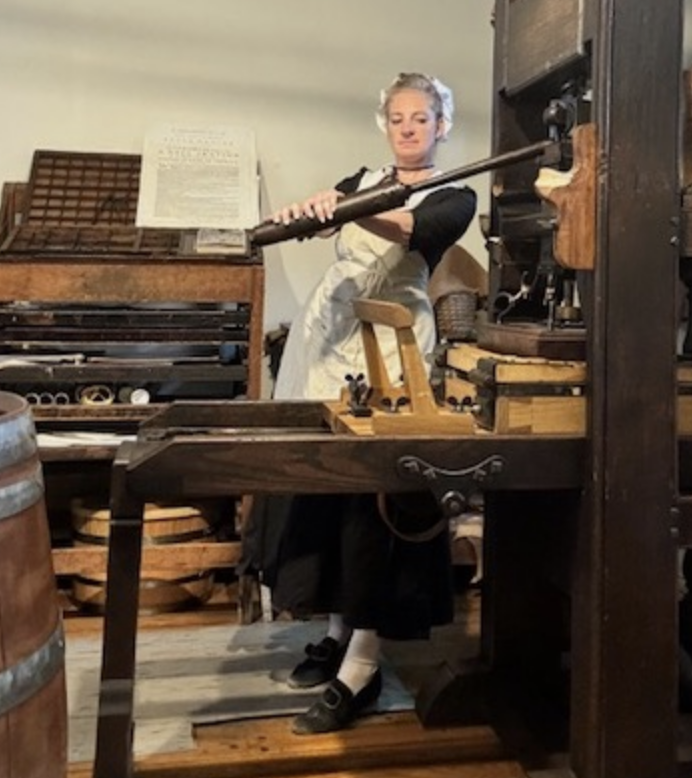
18th century newspapers and pamphlets were essential to the dissemination of information and were instrumental in fanning the flames of discord on both sides of the revolutionary conflict. However, how did printers get their information? This interactive program, with the added component of 18th century material culture items, focuses on the incredible process of typesetting and the role that printing and propaganda played in the pivotal events leading up to the American Revolution.
Michele Gabrielson is a local history teacher and historic interpreter of the 18th century. When she is not teaching in the classroom, Michele can be found leading tours, lectures, and demonstrations at historic sites in the greater Boston area. She specializes in interpreting the history of colonial women printers, the stories of loyalist refugees, and of 18th century chocolate makers! Most recently, she has taken on building a first-person impression of the revolutionary playwright and poet Mercy Otis Warren. Michele additionally serves as the secretary for the newly formed Mercy Otis Warren Society, dedicated to helping preserve the contributions of Mercy, is a member of the Authenticity Standards Committee for Minuteman National Historic Park, and is the coordinator for the Battle Road Guides for the annual reenactment of the Battle of Lexington and Concord. She was awarded a 2024 Rising Star Award for Public History by the Massachusetts History Alliance for her programming titled, “The Revolutionary Classroom,” and named a finalist for the 2024 Massachusetts History Teacher of the Year. She has been named the Massachusetts Daughters of the American Revolution’s Outstanding History Teacher of the Year for 2025 and the 2025 winner of the Fred Graham Award for Excellence in Teaching from the Massachusetts Society of the Cincinnati.