
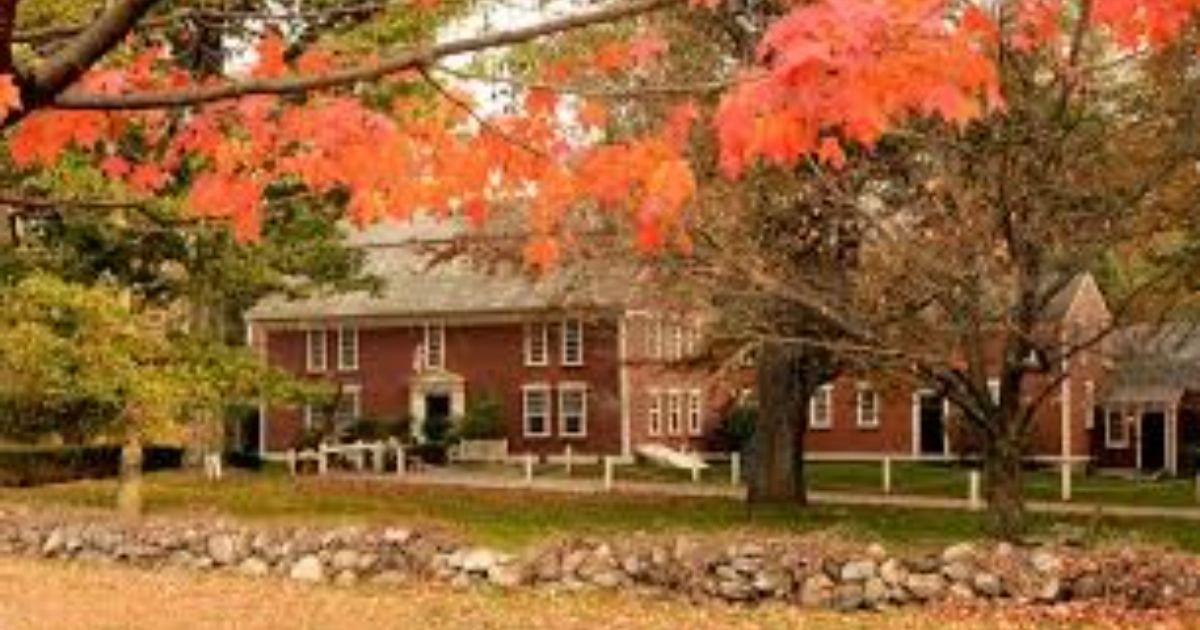
Nestled in Sudbury along the old Boston Post Road, the Wayside Inn holds a special place in Massachusetts history. Known today as one of the oldest continually operating inns in the United States, its story reaches back to the days when taverns were more than roadside stops, they were community gathering places, news hubs, and even Revolutionary staging grounds.
Built in 1716 by David Howe, the inn (then known as Howe’s Tavern) sat along the busy route between Boston and Worcester. This location made it a natural meeting place for travelers, merchants, and militiamen in the decades leading up to the Revolution. News of rising tensions with Britain traveled quickly through such taverns, and Howe’s became one of the key stops for spreading information.
In colonial Massachusetts, taverns played a vital role in the exchange of ideas. They were where political debates unfolded, militia plans were drawn, and patriot sentiment grew strong. The Wayside Inn’s patrons included local farmers and tradesmen, many of whom answered the call to arms on April 19, 1775, when the alarm spread from Lexington and Concord.
The inn’s Revolutionary spirit was immortalized by Henry Wadsworth Longfellow in Tales of a Wayside Inn (1863). Longfellow’s poetic retellings helped frame the inn as a symbol of America’s early struggles and resilience. While his work came decades later, it cemented the inn’s image as a living link to colonial times, drawing visitors eager to connect with the Revolution’s memory.
Visitors can walk the same floors that 18th-century patriots once trod and dine in rooms that echoed with talk of liberty. As part of Massachusetts’ MA250 commemorations, the Wayside Inn offers a window into the daily life and public culture that sustained the Revolution. It reminds us that independence was not only forged in battles but also in taverns and inns where ideas were shared, communities gathered, and ordinary people prepared for extraordinary events. The Wayside Inn stands today not just as a historic landmark, but as a reminder that the Revolution was fueled by common people who gathered in common places to envision a new nation.