
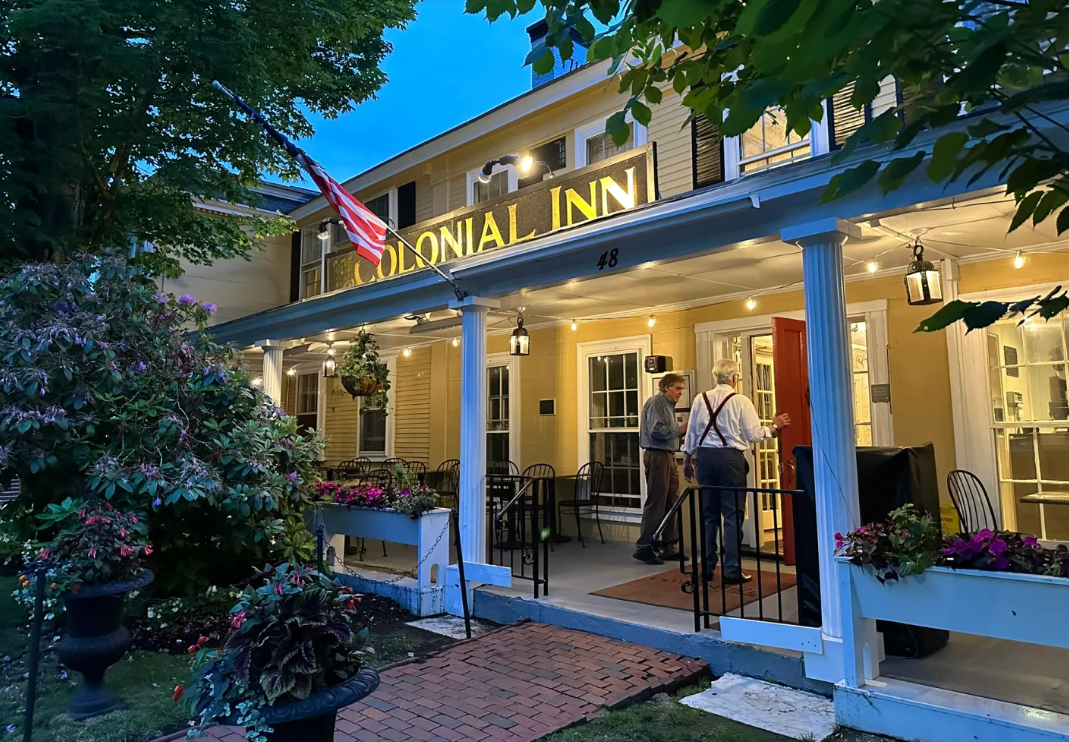
The Concord Colonial Inn has stood at the heart of Concord, Massachusetts since 1716, long before the first shots of the American Revolution echoed across the town green. Known during the Revolutionary era as Wright’s Tavern, the building was not merely a place of rest, but a center of political organization, intelligence sharing, and military decision-making.
On the night of April 18, 1775, as British troops prepared to march toward Concord, local militia leaders gathered inside the tavern. Orders were issued, riders were dispatched, and preparations were made for what would become one of the most consequential days in American history. When fighting broke out the next morning at the North Bridge, many of the men who stood their ground had passed through Wright’s Tavern hours earlier.
During the war, the inn served multiple roles. It was a meeting place, a supply point, and at times a lodging site for soldiers. British officers also occupied the building during their retreat from Concord, a reminder that the war often unfolded in shared civilian spaces rather than distant battlefields.
The structure itself reflects the layered history of the Revolution. Walls that once heard quiet conversations about resistance later witnessed open conflict and occupation. The building survived not because it was protected from history, but because it was embedded within it.
Today, the Concord Colonial Inn stands as one of the oldest continuously operating inns in the United States. Guests walk the same halls where militia leaders debated strategy and soldiers rested between marches. Its significance lies not in a single dramatic moment, but in its steady presence during a period of upheaval.
The inn reminds us that the American Revolution did not happen only on fields and bridges. It happened in taverns, homes, and gathering places where ordinary people made extraordinary decisions. In Concord, one such place still stands, quietly holding centuries of stories within its walls.