
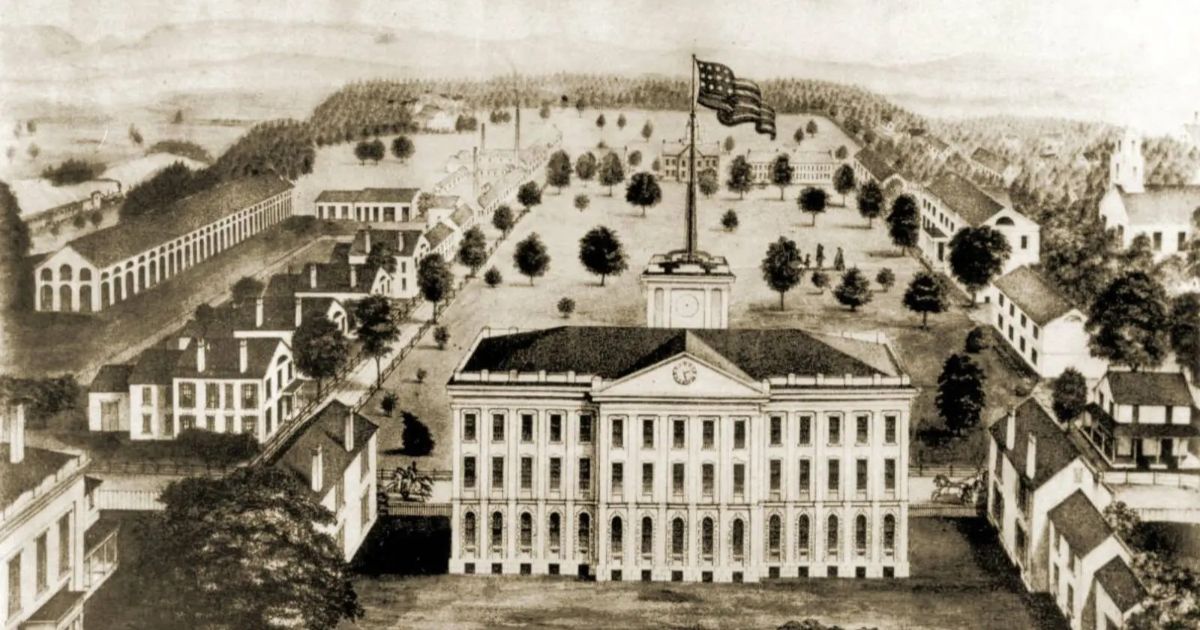
While battles were fought with muskets, liberty was secured with supply lines. Nowhere is this more evident than at the Springfield Armory, a site established during the Revolution that became central to America’s military strength.
In 1777, General George Washington chose Springfield as the site of a major arsenal, recognizing its strategic location on the Connecticut River and away from vulnerable coastal cities. From here, weapons, ammunition, and supplies could be manufactured and distributed to Continental forces. The Armory became a lifeline for the Revolution, sustaining the army in its fight for independence.
The Armory’s role during the Revolution laid the groundwork for its later significance as the nation’s first federal armory. Over time it became a center for innovation, pioneering techniques in mass production and interchangeable parts. But its origins were firmly tied to the Revolutionary cause: ensuring the fledgling Continental Army could stand against the world’s mightiest empire.
Springfield Armory embodied the Revolution’s spirit of self-determination. No longer dependent on imported arms, the colonies were taking control of their own defense. It was here that liberty was not only dreamed of but physically forged, musket by musket, bayonet by bayonet.
Now a National Historic Site, Springfield Armory invites visitors to explore original buildings, historic weapons collections, and exhibits that tell the story of America’s fight for independence and its ongoing tradition of military innovation. For MA250, the Armory serves as a powerful reminder that the Revolution was sustained not only by ideals but by industry and perseverance.
When visitors walk the grounds of Springfield Armory, they stand where Washington’s vision of a self-sufficient America first took shape. It remains one of the most important Revolutionary landmarks outside Boston, a place where the tools of freedom were crafted to secure independence.