
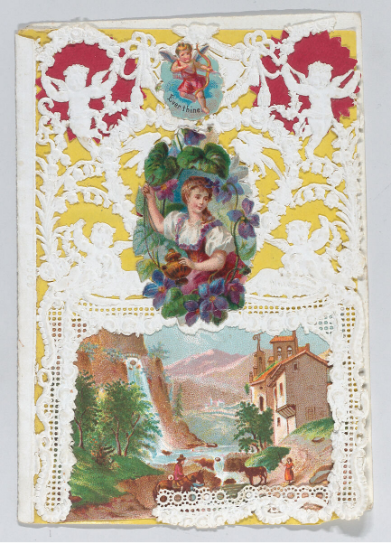
Photo credit: Valentine, Esther Howland, The Metropolitan Museum of Art
Massachusetts is a place built on firsts. The first public park. The first public library. The first subway system. The first college. Again and again, ideas born here have shaped how Americans live, work, and celebrate.
One of the most charming firsts arrived in an unexpected form: the modern American Valentine’s Day card.
Today, exchanging Valentine cards feels timeless. But in the early 1800s, the tradition looked very different. Most Valentines were simple handwritten notes, often plain and practical. That changed in the 1840s, when a young woman from Worcester, Massachusetts transformed the holiday with creativity and entrepreneurial spirit.
Her name was Esther Howland.
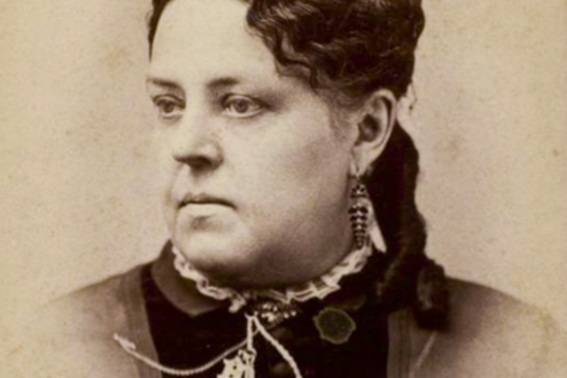
Photo credit: Mount Holyoke College
As a teenager, Howland received an ornate Valentine imported from England. The card featured delicate paper lace and colorful designs unlike anything commonly available in America. Instead of simply admiring it, she saw an opportunity. Howland believed Americans would embrace beautiful, ready-made Valentine cards if someone could produce them at scale.
Working from her family home in Worcester, she began experimenting. She imported lace paper and decorative elements, designed intricate layouts, and recruited friends to help assemble the cards by hand. What started as a small creative project quickly grew into a thriving business.
By the late 1840s, Esther Howland was producing thousands of Valentines each year. Her designs were sold across the country, and Worcester became known as the center of the American Valentine industry. She earned a lasting title: the Mother of the American Valentine.
This was more than a seasonal craft business. It was a quiet cultural revolution.
Howland changed how Americans expressed emotion. She helped turn Valentine’s Day into a national celebration centered on thoughtful messages, artistic design, and shared sentiment. The idea that a simple card could carry affection, humor, or devotion on a mass scale was new, and it reshaped the holiday for generations to come.
That spirit fits perfectly within the larger Massachusetts story.
Just as the American Revolution began here and transformed the world, smaller revolutions have always taken place in Massachusetts homes, workshops, and small businesses. Innovation in this state has never been limited to politics or technology. It also includes traditions that bring people together and make daily life a little warmer.
Every February, millions of people exchange cards in classrooms, offices, and living rooms. Many never realize that this familiar ritual traces directly back to Worcester and to one determined Massachusetts entrepreneur who believed beauty and kindness could be shared far and wide.
Massachusetts 250 celebrates stories like this. The state’s history is filled with bold ideas, creative breakthroughs, and everyday innovations that helped shape the nation. The modern Valentine card stands proudly among those contributions.
So this Valentine’s Day, when you open a card or send a heartfelt note, remember that you are taking part in a Massachusetts first. It is one more reminder that even simple gestures can start something truly revolutionary.