
The Great Barrington court closures, or, why the Revolution was definitely not a tea party
Revolutions are not tea parties. And yet how we remember the American Revolution makes it seem far less chaotic, divisive and violent than it really was.
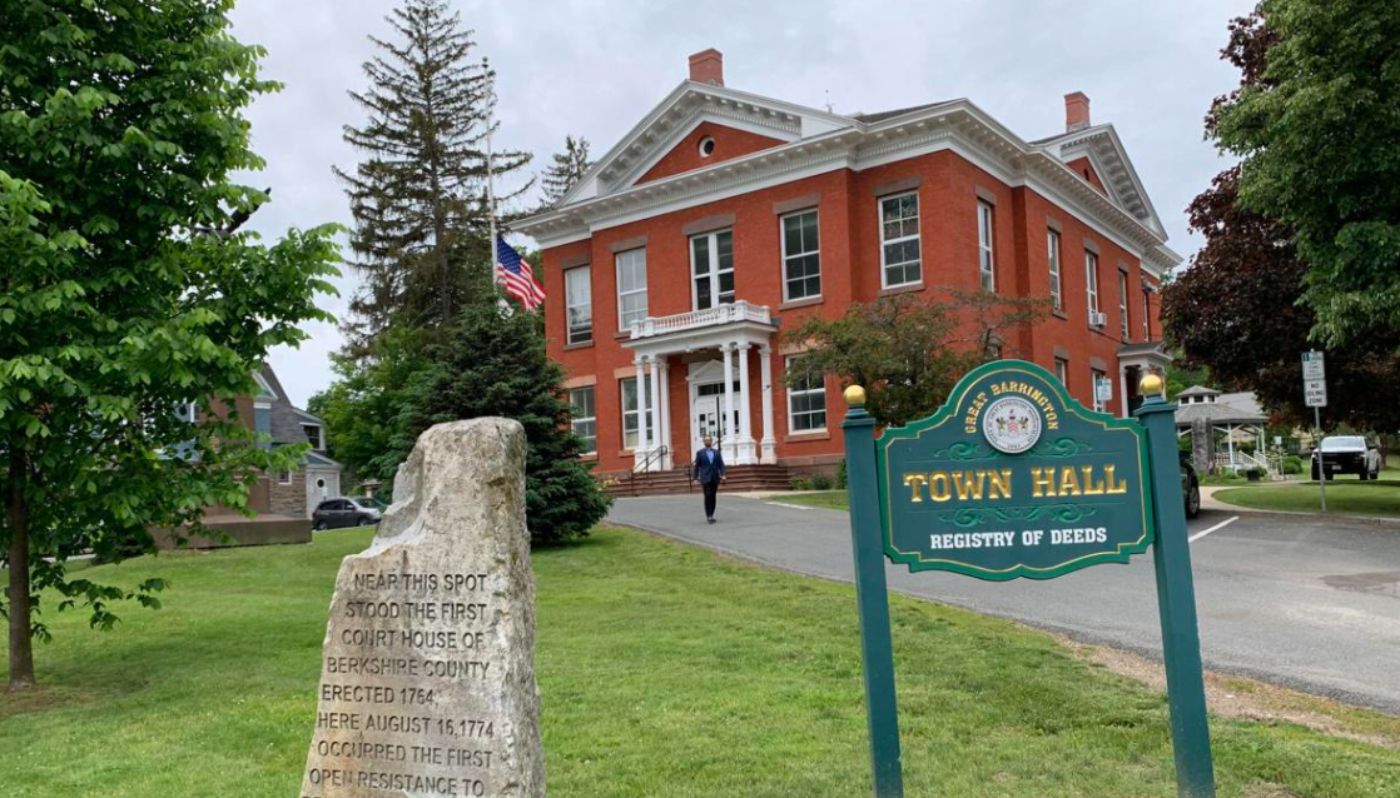
Look no further than the lawn of Great Barrington’s town hall, a few feet from the corner of Castle and Main streets. Since 1890, a small stone monument there has commemorated this, the location of Berkshire County’s first courthouse, as site of “the first open resistance to British rule in America.”
Indeed, this simple monument, facing east, seems proudly to defy Boston almost as much as Britain — as if to imply that the Berkshire men who closed the court here in August 1774 showed more courage than brethren who had recently turned Boston harbor into “a teapot.”
Like Boston’s Tea Party, however, Great Barrington’s monument evokes deep ambiguity in the Revolution’s memory. Literally and figuratively, the marker sits in the shadow of government buildings that project law, order and authority. Yet the “resistance” it honors involved an act that any law-abiding person, then or now, would recognize as a heinous crime: kidnapping.
Great Barrington’s memorial thus renders the Revolution safe for public consumption. What many at the time perceived as treason, insurrection or a “civil war” becomes instead a story of rebellious colonists who simply revered the law and wished to restore it.
PROTEST BECOMES REBELLION
Yet the Tea Party of March 1773 was the largest single criminal act of property destruction in American history. To protest a law granting the East India Company a monopoly on the sale of tea in North America, Bostonians sworn to secrecy dumped into the sea 42 chests of the stuff (today worth almost $2 million). To avoid accountability, the protestors disguised themselves. Even after independence, only a handful ever admitted they “partied” with the detested substance.