
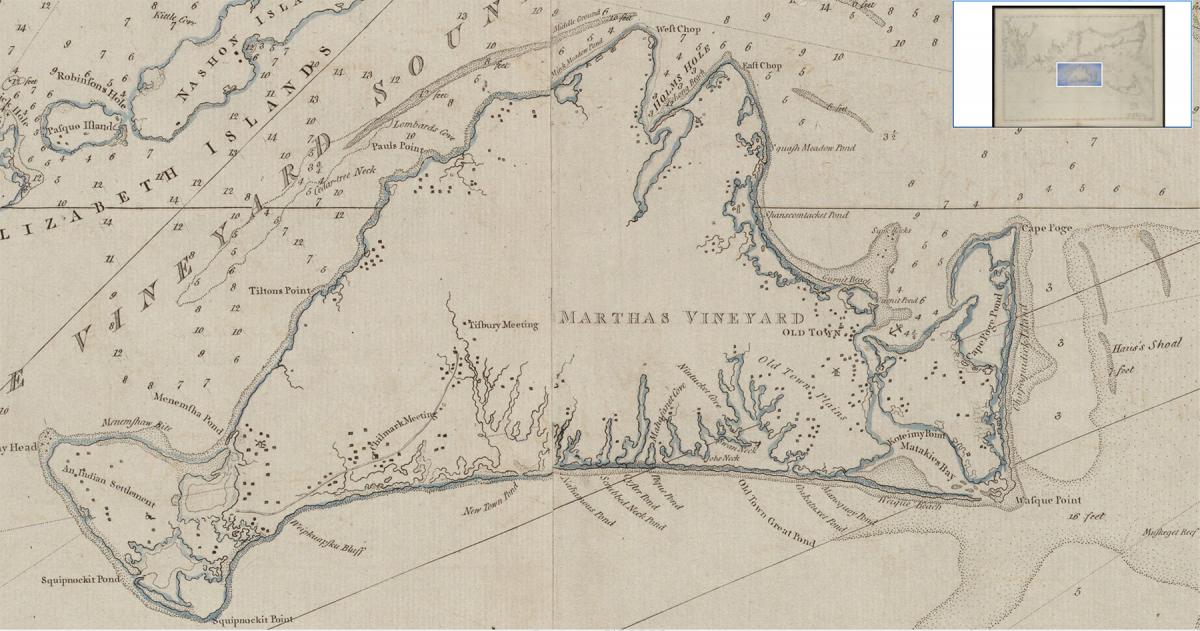
During the American Revolution, Martha’s Vineyard found itself in a difficult position: geographically exposed, economically vulnerable, and politically caught between patriot ideals and British power. While the island didn’t see pitched battles or famous declarations, its story is one of resilience, quiet resistance, and the high cost of occupation.
In September 1778, the Revolution reached the shores of Martha’s Vineyard in a dramatic way. British forces, led by Major General Charles Grey, raided the island as part of a broader campaign in New England. With a fleet of warships and several hundred troops, they arrived demanding supplies, and they got them. Vineyard towns were forced to surrender 10,000 sheep, hundreds of cattle, and provisions under threat of destruction. The British also demanded that no resistance be raised, and while there were no militias strong enough to repel such a force, the people of the island complied under duress, not loyalty.
The raid devastated the island’s already-fragile economy. Agriculture and maritime trade had been severely disrupted by the war, and now Vineyarders were left with diminished livestock and little means to support themselves. Even so, they didn’t aid the British beyond what was demanded. In fact, after the raid, island leaders petitioned the Massachusetts government for compensation, stating that their cooperation had been coerced and their suffering real. This appeal represents one of the earliest documented cases of Massachusetts civilians seeking reparations for Revolutionary losses.
Although the island remained largely occupied and unprotected, Martha’s Vineyard residents were not passive. They quietly supported the patriot cause where they could, including protecting goods from seizure and helping transport messages and provisions for the Continental effort. Some Vineyarders even engaged in privateering, outfitting or supporting ships that targeted British vessels along the coast.
The Revolution exposed the island’s isolation. Without military support, the Vineyard learned it had to endure and adapt. The people’s loyalty to the patriot cause remained strong, but it was tempered by survival. In many ways, their story is emblematic of smaller coastal communities throughout New England, caught between ideals and survival, sacrifice and sovereignty.
Today, the raid of 1778 stands as one of the most defining Revolutionary moments for Martha’s Vineyard. While not marked by cannon fire or declarations, it represents the burdens placed on everyday citizens during a time of extraordinary upheaval. It also underscores the need to remember that liberty, while loudly claimed in places like Boston and Philadelphia, was often quietly preserved in towns like Edgartown, Tisbury, and Chilmark.

For those interested in exploring this chapter of the island’s past firsthand, the Vineyard Preservation Trust offers “Martha’s Vineyard: A Revolutionary War Refuge” walking tours of historic downtown Edgartown. These tours highlight the local impact of the Revolution through the lens of preserved sites such as:
- The Cooke House (1766): Once home to generations of the Cooke family and Great Harbor’s customs house, where visitors can learn how Edgartown residents adapted under British pressure, especially following General Grey’s infamous raid.
- The Old Whaling Church & Dr. Daniel Fisher House: A reflection on how war disrupted the maritime economy and foreshadowed the island’s later whaling boom.
- The Vineyard Gazette Building (1760): Originally the home of Patriot militia commander Benjamin Smith, this site ties the island’s Revolutionary spirit to its ongoing role in journalism and public discourse.
- The Vincent House (1672): A glimpse into colonial life and the quiet rebellion of hiding valuable Eastern White Pine boards from British seizure.
Tours run seasonally from July 1 to September 6, Tuesday through Saturday at 10:30 a.m., offering an immersive way to connect present-day Edgartown with its revolutionary past.
Whether through historic homes or hidden stories, Martha’s Vineyard remains a testament to how communities far from the front lines still carried the weight of a revolution, and how their legacy endures in the landmarks we preserve today.