
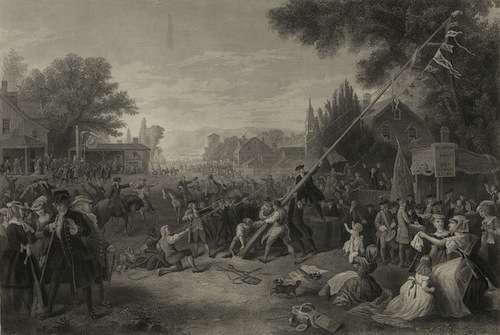
Before the first shots rang out at Lexington and Concord, the spirit of rebellion was already rising across Massachusetts, sometimes quite literally. In the years leading up to the American Revolution, communities throughout the colony took a bold and symbolic stand against British rule by raising Liberty Poles: tall wooden masts often topped with flags or banners that represented defiance, unity, and local control.
Inspired by similar actions in New York and the writings of early patriots, Massachusetts towns began planting Liberty Poles on village greens and near meetinghouses. These poles served as public declarations of resistance to Parliament’s authority and rallying points for local militias. They were often raised during celebrations, town meetings, or spontaneous gatherings of residents voicing grievances over taxes, trade restrictions, or the presence of British troops.
What made these uprisings so powerful was their grassroots nature. In towns like Great Barrington, Sheffield, and even remote parts of Worcester County, farmers, shopkeepers, and laborers gathered not to fight battles, but to make it clear that they no longer recognized British-appointed officials. Raising a Liberty Pole was a collective act, equal parts protest and performance, that galvanized public opinion and warned loyalists to stand aside.
British sympathizers, recognizing their threat, often tried to cut them down. In response, communities would raise them again, sometimes overnight, further fueling tensions. These skirmishes over poles may seem minor today, but at the time they carried immense weight. They were visible, defiant, and entirely local acts of revolution.
By late 1774, many towns in Massachusetts had dismissed royal authority altogether. With Liberty Poles standing proudly at their centers, these communities had effectively declared their independence months before it became official.
Though rarely mentioned in textbooks, the Liberty Pole uprisings were early signals that the people of Massachusetts were no longer subjects, they were citizens in the making. Their quiet defiance helped set the stage for a Revolution that would change the world.