
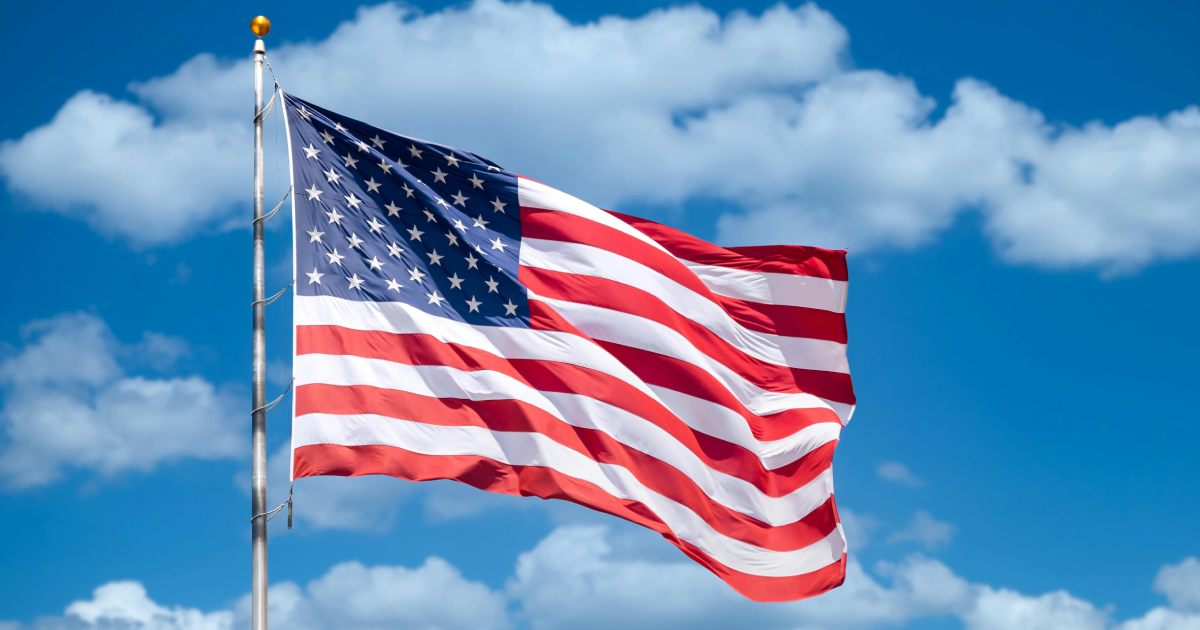
The evolution of the United States flag represents a growing nation.
By Phyllis M. Cahaly, CMD, Director of Partnership Marketing, Massachusetts Office of Travel & Tourism
The flag of the United States has never been a static emblem. Rather, it has grown and transformed alongside the nation itself, reflecting political change, territorial expansion, and shifting cultural ideals. Its evolution mirrors the American story: contested, aspirational, and continually unfolding.
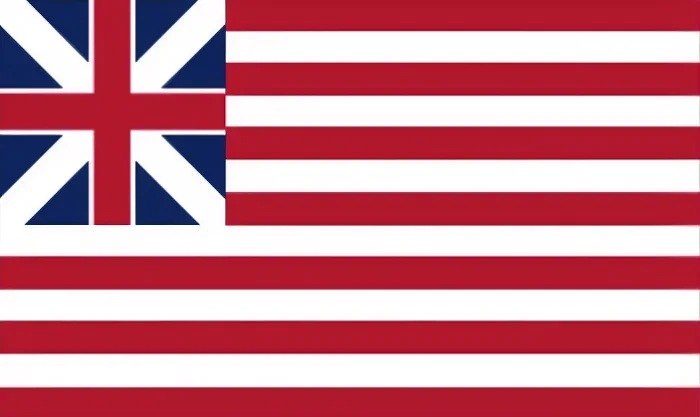
The earliest prototype of the U.S. flag emerged even before independence and was known as the Grand Union Flag, (or the Continental Union Flag or the Cambridge Flag). It was first hoisted on January 1, 1776, during the early days of the Revolutionary War and remained in effect until 1777. This design featured 13 alternating red and white stripes symbolizing the colonies, but its canton, the rectangular inset in the upper corner closest to the flagpole, displayed the British Union Jack, a reminder of the colonies’ still ambiguous relationship with the Crown. The Grand Union Flag represented unity among the colonies, yet also the tension of people on the brink of declaring independence and a new nation.
Once the Continental Congress adopted the Declaration of Independence in July 1776, the need for a distinctly American symbol became clear. On June 14, 1777, a date now celebrated as Flag Day, Congress passed the first Flag Act, declaring: “the flag of the United States be 13 stripes, alternate red and white; that the union be 13 stars, white in a blue field, representing a new constellation,” a poetic way of expressing the emergence of a new nation among established powers.
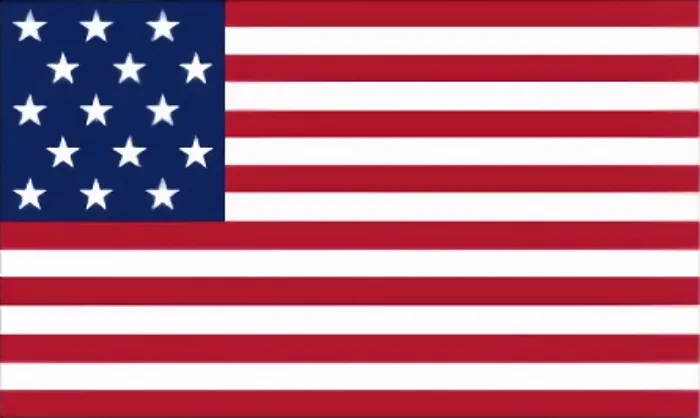
The earliest version of this flag, often associated with being sewn by Betsy Ross, though historians still debate the accuracy of the Ross legend, the circular star arrangement symbolize equality among the states — no colony placed above another. Other early designs placed the stars in rows or scattered patterns, reflecting the lack of strict regulation in the flag’s early decades.
As the nation expanded, the flag changed with it. In 1795, after Vermont and Kentucky joined the Union, Congress approved a new design with 15 stars and 15 stripes. This version became famous during the War of 1812, particularly at Fort McHenry, where its sight after a night of bombardment inspired Francis Scott Key to write the poem that would become the nation’s musical anthem, The Star-Spangled Banner. Yet adding stripes for each new state quickly proved impractical. By 1818, with five more states admitted, Congress returned the flag to 13 stripes, honoring the original colonies, and declared that a new star would be added in the canton for each new state as the country developed.
This decision set the pattern that continues today. Every star on the flag marks a moment of national growth. The addition of states such as California in 1850, Alaska in 1959, and Hawaii in 1960 expanded the constellation, culminating in the current 50-star flag. The modern arrangement, nine rows of alternating five and six stars, was adopted on July 4, 1960, and has remained unchanged for over six decades, the longest period of stability in the flag’s history.
Throughout its evolution, the flag has served not only as a national identifier but also as a cultural symbol. During the Civil War, both Union and Confederate forces used flags to express competing visions of America. In the 20th century, the U.S. flag became a global emblem of American presence, raised on battlefields, planted on the moon, carried in civil rights marches, and the symbol of patriotic unity in times of tragedy. Its imagery has been used in protest as often as in celebration, demonstrating its role as a living symbol representing all Americans rather than a static artifact.
The flag’s colors carry layered meanings. Red evokes valor and sacrifice; white symbolizes purity and ideals; blue represents vigilance, perseverance, and justice. These interpretations, though not formally codified at the flag’s creation, have become widely accepted reflections of American civic values. The stars and stripes together form a narrative of harmony through diversity, a federation of states bound by shared principles.
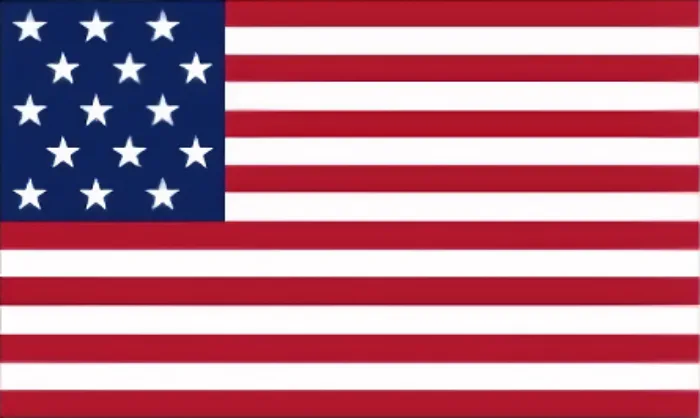
Today, the flag continues to evolve in interpretation even as its design remains fixed. It is displayed on homes, government buildings, military uniforms, and public monuments. It appears in art, fashion, sports, and political movements. Its meaning shifts depending on who raises it and why, yet it remains one of the most recognizable symbols in the world.
As we celebrate the 250th Anniversary of the American Revolution, the evolution of the United States flag is ultimately a story of adaptation. Each change in its design marks a chapter in the nation’s growth, and each generation finds new meaning in its familiar pattern of stars and stripes. As long as the country continues to change, the flag will remain a powerful reminder of both where the nation has been and where it strives to go.