
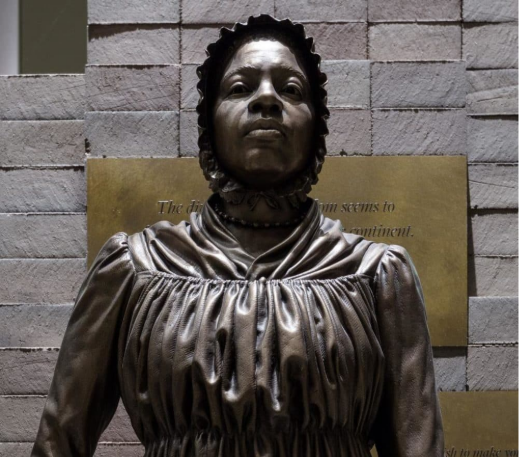
Photo credit: A statue of Elizabeth Freeman courtesy of The Smithsonian National Museum of African American History and Culture
Black History Month invites us to look beyond familiar names and discover the fuller story of the American Revolution. In Massachusetts, that story includes extraordinary Black women whose courage, creativity, and persistence shaped the fight for liberty. Their contributions were often overlooked, but they were essential to the birth of the Commonwealth and the nation.
One of the most powerful voices of the era was Phillis Wheatley. Enslaved as a child and brought to Boston, Wheatley became an internationally celebrated poet whose words challenged the world to see Black intellect and humanity. Her published poems spoke directly to the ideals of freedom and equality that fueled the Revolution. In a time when many doubted that a Black woman could even be literate, Wheatley used her pen to demand that America live up to its highest principles.
Legal change in Massachusetts also came through the bravery of Black women. Elizabeth Freeman, known as Mum Bett, was enslaved in Sheffield when she heard the newly written Massachusetts Constitution declare that all people were born free and equal. She took those words seriously and sued for her freedom in 1781. Her victory helped set a legal precedent that effectively ended slavery in the Commonwealth. Freeman’s case proved that the promise of the Revolution could be used as a tool for justice.
Another figure whose story deserves greater recognition is Lucy Terry Prince. Enslaved in Deerfield and later freed, Prince became known for her powerful oratory and advocacy. She defended her family’s land rights before the Vermont Supreme Court and is considered one of the earliest African American poets for her work documenting the 1746 Deerfield massacre. Her life demonstrated that Black women were leaders and defenders of their communities long before the Revolution began.
Countless other Black women supported the patriot cause in quieter but equally important ways. They organized boycotts, cared for soldiers, carried messages, and kept households and businesses running while war disrupted daily life. The Revolution depended on their labor, resilience, and belief in a better future.
Today, these stories are preserved and celebrated by the Museum of African American History in Boston and Nantucket. The museum brings to life the experiences of early Black Bostonians, including the community that worshipped at the African Meeting House on Beacon Hill. Visiting these historic spaces offers a powerful reminder that Black history is Massachusetts history. The museum’s exhibits, programs, and educational resources ensure that the voices of Revolutionary-era Black women are not forgotten.
Photo credit: Boston Lyric Opera
This summer, their legacy will be highlighted in an exciting new way. Boston Lyric Opera will present She Was There, an original production that centers the experiences of Black women during the American Revolution. Funded in part by a Massachusetts 250 grant, the opera brings history to the stage through music and storytelling, honoring women whose names rarely appear in textbooks but whose impact still echoes today.
Massachusetts 250 is about telling a more complete story of our founding. That story cannot be told without Black women who demanded freedom, shaped public thought, and pushed the Commonwealth toward justice. Their determination helped turn revolutionary ideals into real change.
As we celebrate Black History Month, we are reminded that the American Revolution was not only fought by famous generals and statesmen. It was carried forward by women like Phillis Wheatley, Elizabeth Freeman, Lucy Terry Prince, and countless others whose strength helped define what liberty truly means.
She was there. And because of her, Massachusetts became a place where freedom could begin to grow.